Wednesday, October 28, 2015

Cemetery Trees of Boulder Creek

So long ago, I don't remember when
That's when they say I lost my only friend
Well they said she died easy of a broken heart disease
As I listened through the cemetery trees
~ The Wallflowers 

There's something solemn and sacred about cemetery trees. I often wonder if the oldest of the trees were present for the burials. When searching for a cemetery among the steep mountain canyons that were once logged by the community that briefly lived there, I wonder if there were any trees at all?


Linking up with Abracabadra for a Wordless Wednesday. Photos are from my search for Boulder Creek Cemetery. The mountains are full of trees today and the fallen lumber is that of the old logging camp. One tree we claimed as firewood and the tree rings reveal that it had indeed stood sentinel over the burials before it died of its own broken heart disease, blue stain.

Blue Stain, a Broken Heart Disease for Cemetery Trees

Walking the Old Logging Trail in Search of Dead Trees to Fall

All That's Left of Boulder City

Hollow Log on Boulder Creek

Whirl of Pine Needles

Old Roots

Larch in Blaze Orange for Fall

Walking Among the Old Ones

Cemetery Tree in the Distance

Standing White Pine

Fenced Boulder Creek Cemetery

Distant View

Cutting the Downed Pine

Wednesday, October 21, 2015

Silver and Gold

Following the White Truck Across Nevada
Roman Nose Lake
Visiting Family
Silver & Gold
Weasels Hiding in the Rocks
All Quiet on the Lake
Except for the Curious GSP
Treeless after Nearly 50 Years
White Truck's First Idaho Adventure
Sniffing the Gold
Ghostly Mist on the Ridge
"Make new friends
 but keep the old.
One is silver
the other is gold."
"Make New Friends" is a scout song that comes to mind as I scan the silver rocks and gold tree leaves of Roman Nose Lake. Silver and gold, silver and gold.

A few weeks back we had dinner and ice cream with old friends, shared laughs about long ago antics and marveled how much silver we are all getting.

We brought back the Mills farm truck from Sandblow Dairy in Fallon, Nevada. My inlaws have retired and gifted us with the truck at a time we could use the gift. The best gift, though was visiting with family and old friends.

We returned and had our first truck adventure. Todd's brother Gee and his wife Kathy drove up from Nevada in our wake and it was a pleasure to share with them our beautiful mountains and valleys.

We laughed about elevations, though. While the mountains are steep here, the valley floors are relatively low. We live at about 2,200 feet above sea level in Elmira. Our mountains go straight up to 5,000 and 7,000 feet in elevation. Stunning.

Yet, if you consider Nevada, the elevation of Fallon sits on a basin already 4,000 feet high. Those Great Basin ranges have mountains as tall as almost 12,000 feet. Many are surprised to realize how mountainous that state is and why it is called a high mountain desert.

No desert here in the Inland Pacific Northwest, though we continue to be unseasonably dry. Clouds and mist have returned but lack rainfall typical of this season. It's warm for October, too. We are concerned for the snow pack which requires lower temperatures, heavier precipitation and a slow spring.

Without it, we are in danger of another bad fire season.

Up on the Roman Nose, the peak itself remains bald of forest. In 1967 the Sundance Fire burned so hot -- a raging firestorm -- that nothing has grown back to replace the timber lost. Two men died up there, dozing a fireline when the fire roared over the peak like a flaming hurricane. A third man, on lookout at the station on the peak, managed to get into rock crevices deep enough to have survived.

When I visit the quiet alpine lake in the treeless bowl, I can't help but think of those who fight fires. Some win. Some do not. I pray for a heavy snowpack.

We met new friends at Laughing Dog Brewery. We always meet the most interesting people there. This young couple, newly married, have a six month old Springer Spaniel. Dogs are welcome in the tasting room. We make many new canine friends, too. The young man, so full of life yet, a college baseball player, new wife, new dog, just visited Costa Rica...he's a fire fighter.

There's something so youthful and courageous about those who fight the flames. He tells us he spent a good month on the fires in the St. Jo region. That's steep terrain. He says he loves to hike and it was nothing. Yet, it is everything he places on the line. His life.

Up there on the Roman Nose the ghosts of fire fighters are silent. Their memory hangs in the mist. And I bid them farewell, until we return next spring, hopeful of moisture and huckleberries. Hopeful of a reprieve from fires.

Linking up with Abracabadra for Wordless Wednesday. All photos (including the drive-by shot) by Charli Mills.

Wednesday, October 14, 2015

Slow Fall Days

It's nearly a wrap on Elmira Pond. The migrators are going south now. Blue Heron still makes an appearance, but his show days are over. Birds flock through the pines, noisily at times. The osprey and hummingbirds are long gone. Yet the cat, bees and fall flowers linger as the wood pile grows and the dogs snuffle at gopher mounds in the tall blond grass.

Here's a look at these slow fall days on Elmira Pond. Joining up with Abracabadra for Wordless Wednesday. And, for once, I have few words as I savor these shots.

Looking for Lost Gophers

Train Logs & Dogs in Blond Grass

Dabblers Passing Through

Gathering at the Pond Log Before Flying South

An Occasional Visitor is Blue Heron in Fall

Cassin's Finch Passing Through

Nuthatch Seeking Pine Nuts for the Journey

Blackbirds Flocking in the Pines Before Leaving

Fall Leaves, No Apples, Stolen Autumn Dreams

Thieves, Deer & Moose Leave the Quinces for Me to Figure Out

Snapdragons Love Fall

Bootsy Loves Rolling in the Dirt Beneath Late Cosmos

Wednesday, September 16, 2015

Bee Enduring

Late Dandelion Blooms
September Wild Bee #1
September Wild Bee #2
Great Buckets of Pollen
September Wild Bee #3
Mutual Dandelion Affection
September Collection
Butterflies Appreciate the Blooms, Too
Full
More people are aware of the plight of bees these days, but many are unwilling to consider co-habitation. What if saving the bees means living with them?

Bees increase with late summer. The same people who cheered them on in spring are now asking how to get rid of them. Sadly, this is one reason why we don't have bees. We fear them in proximity.

Mind you, I'm not addressing anyone who has to carry an epi-pen or who might have a colony of killer bees in their shed. This is meant to encourage those of you who care enough for the plight of bees to endure living in harmony.

Honey bees used in agriculture and apiaries. They are not the same as wild bees. Both are pollinators and both are required for us to eat many of our favorite fruits, nuts, legumes and vegetables. Honey bees are used commercially to pollinate crops. Wild bees pollinate our gardens along with butterflies and birds.

I'm no expert. I'm a backyard student, learning about birds and bees, gardens and trees. For experts, please visit your nearest grand land university extension office.

For ideas on how to bee enduring (live harmoniously among the bees), learn to love dandelions.

Spring bees emerge hungry. Dandelions are among the first blooms to offer pollinators food. This is true of fall, too. Now that the temperatures are dipping at night, I've seen the yellow dandelions of spring return to my lawn. Thus, it is a late summer food.

Honey bees have one purpose in winter -- to keep the queen warm. This might sound familiar to my husband who complains that his sole purpose in winter is to keep me warm! Firewood, extra blankets, fuzzy slippers -- yes, I demand these things of him as if I were a queen bee. So I understand the need.

Wild bees hibernate, often in dirt holes or hollow stems. They will feed as long as there are flowers. See how important those dandelions are right now? I'm also letting the hairy vetch spread in my garden and some is even blooming. I discovered this summer how much the bees enjoy hairy vetch flowers, and it's good for my soil to overwinter with a cover of nitrogen-giving hairy vetch.

Bees need food and shelter, and yes, that means they are underfoot. My rule of cohabitation is the same rule for the barn swallows -- do not nest on my porch, around windows or over doors. I keep an eye out for nests or hives and I prevent the building of them while allowing wild space for development (untended yard borders, pastures, outside the garden fence).

I pay attention to where the bees live. One squash plant grew close to a hive beneath my fence so I harvested across the plant without any trouble. I mow with my blades set high so I do not disturb bees that live in the lawn. Get over it. They do and they aren't going to attack you under normal circumstances. If you have abnormal circumstances contact a professional bee remover and do not use chemicals.

Let the dandelions lives. Live with bees; they are fascinating to watch, helpful food partners and I have not found them to be any more aggressive than butterflies. I sit on the lawn and take pictures. They endure me as much as I endure them.

Take time to learn about bees in your area and let go of having a perfect, bee-less yard. If everyone had a bee-less yard, then we'd have no bees. Be willing to create and share space with bees.

Linking up with Abracabadra for Wordless Wednesday. Extra words, dandelions & photos by Charli Mills.


Thursday, September 10, 2015

Pecker Envy

It Begins Here, But First A Story
Listen to the Marsh Birds Sing in the Pines
Honk! Honk! Traffic Increases
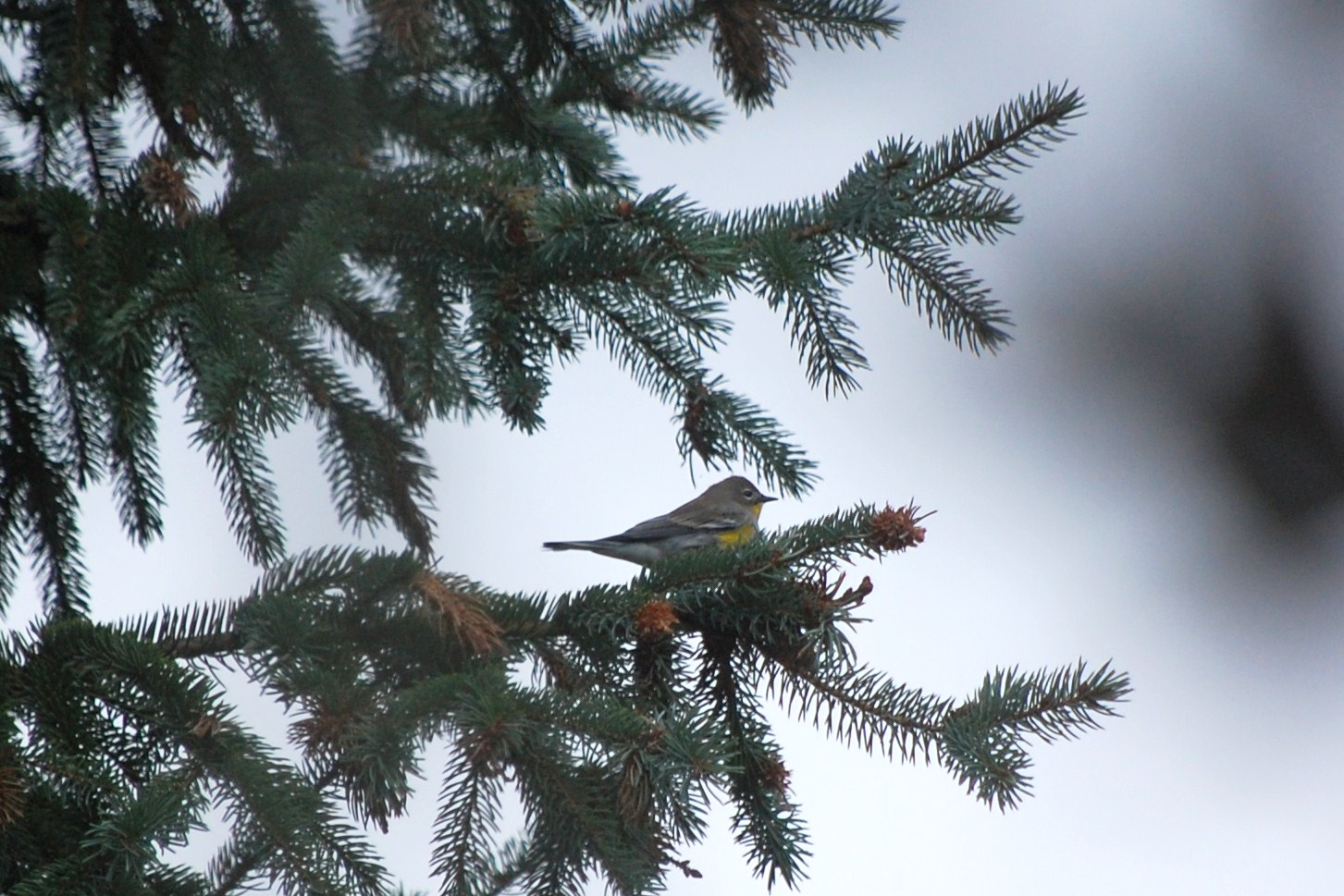
Yellow Rumped Warbler with Other Yellow Patches
Pink & Streaked Cassin's Finch
Lady Cassin Sports No Colors
Osprey & Falcon Country
Talkative Osprey on Nest
Silent Hay Bales in Field
American Kestrel Watching Us Watch Him
Portapotty is Not That Portable
American Kestrel on an Idaho Fencepost
My Miserable Missed Shot of a Downy Wood Pecker
Perfectly Posed Pecker, Photo by Mr. Mills...Grrr...
There is a purpose to the title beyond shock value.

In part, it gives an opening to my opinion on media titles these days. Titles attract attention, but have you noticed the popular ones online follow the formula of arousing curiosity? Titles like, "What She Found Was Shocking" or "He Opened the Door and Then Did This." We're suckers for satisfying our curiosity. Stick with me and I'll satisfy yours with a photo.

Curiosity gets me up in the mornings. What's all that ruckus?

I step outside and hear bird chatter louder than it has been since the robins returned to the 'hood in February. It's commuter traffic -- the avian migration has begun. Geese honk on the pond, red-winged blackbirds zip around one another to race through pine boughs and new birds turn my head as if they were show cars.

I snap shots and post some on a bird group online to ask, "What's this?" My favorite game with geologists has evolved into a new version with the backyard bird-watching experts. With suggestions I go to my field guides or ones online like the Cornell Lab of Ornithology's All About Birds.

Last Saturday a group of cedar waxwings arrived and left before I could grab photo evidence. Two days ago the chickadees showed up with yellow-patched friends. I got good shots and a woman online suggested it was a yellow-rumped warbler. I never did see his rump, but turns out the yellow patches, streaks and white eye ring are indicative of the western version -- Audubon's warbler.

It sounds so prestigious around here during fall migration.

I'm sitting in my lawn chair, properly perched upon my lawn, staring at the blue spruce that towers above my garden. Coffee in one hand, camera in the other, I'm waiting to see the finch I saw from my upstairs window. The bird that got me curious enough to drink outside this morning.

Bootsy meows all the way from the garage kitty door to my side. Shhh...

And he lands. It must be male because he has color. In the spring all the migrating male ducks are easy to tell apart and when they leave I struggle to identify their ladies who all wear similar attire as if they are part of some commune. Beaks and size help, and I can tell dabblers from divers, but those ladies all like to wear nondescript browns. This fella has pink.

He's definitely a finch -- look at that beak. He's not dark red like a purple finch or house finch. His pink hues and streaking mark him a Cassin's finch. His crown is no longer prominent. That's one way males differ in the fall from the spring. When it's mating season they plump up their best colors and chirp, "Hey, Baby..." By fall, they're trying to look incognito, "That wasn't me, Baby, I don't have any fledglings..."

Migrations bring all sorts together. Different birds of different genders and ages all gather. There's safety in numbers. In between cup number one and cup number two, a white breasted hawk attempts to grab at a bird in the pines. Incensed male red-wings chase him off. By the time I get the cup set aside and the cat off my lap, the predator has flapped away.

Before the migration began, Todd wanted to show me...no, we aren't at the title yet!

What he wanted to show me was the valley that had osprey and his favorite falcons, American kestrels. He delivered a new route for Fed Ex before they unceremoniously texted him last Saturday that they had no more work for him. Work has a way of migrating from small western towns this time of year, too.

We drove along the south flank of Pend Oreille River before it turns north at Newport, Washington. The drive was full of osprey nests and we found kestrels where he had regularly seen them. In between old ranches and modern hay fields, we snapped photos, both of us armed with Nikons.

He took me to a small lake with a portapotty chained to a tree. It must be the seasonal bathroom for those coming to the lake to fish. No birds were around, but mid-day is not the best viewing time on waterways. We peed, we looked, we left.

Further down the road Todd drove me through an interesting outcrop of houses. Each one was fenced with "Beware of Dog" signs. Unsettling when you are a delivery driver. His short time on that route he got nipped twice, once even breaking the skin. He wanted to show me some mules. They don't bite.

As we were admiring the mules, a flash of red caught our attention. Todd is just as curious as I am when it comes to critters and birds and we often tease the other if only one of us has a sighting, "I didn't see it, so it didn't exist." Tops on our list of things that didn't exist was the wolverine that crossed the road as I drove and he slept.

This day it was a downy wood pecker.

Excited we both aimed our cameras. My fussy telephoto took time to focus. The bird hopped in and out of view, such an elusive bird to capture in pixels. He snapped his shot, set the camera down and drove off. In losing my focus, I lost my shot. He still gloats that HE got the good picture.

And all I got was an attitude of pecker envy.